

25 Years of the Hoot and North
A quarter century ago, Osprey Valley opened its Hoot and North courses, instantly transforming from a single hidden gem track into something unlike anything else in Canadian golf, with three distinctive golf experiences in one location - and potential to become something greater than the sum of its parts. 25 years later, the story of those courses coming to life is one of vision, transformation, and enduring design.
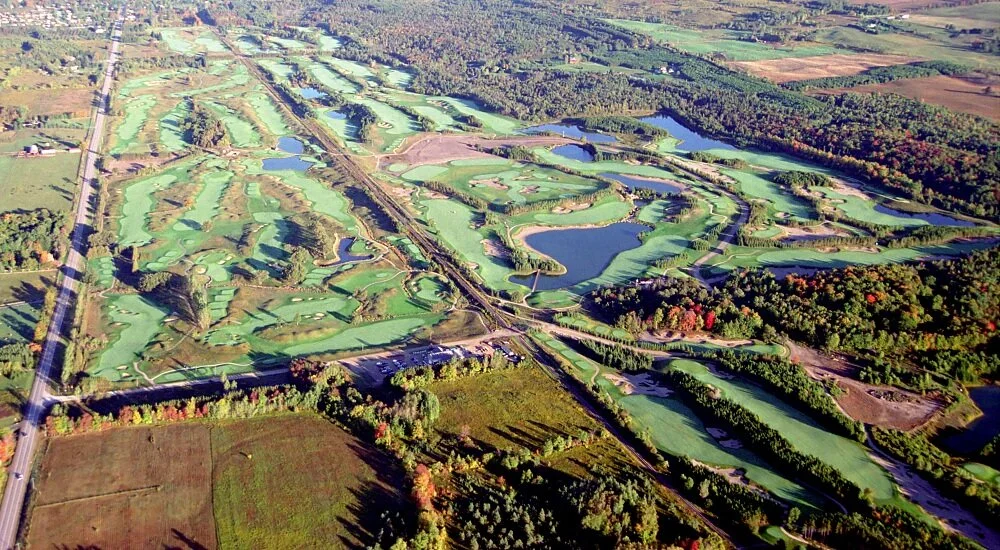
TPC Toronto at Osprey Valley’s three golf courses from above in 2001
By Adam Stanley
Just 40 minutes north of Toronto’s Pearson Airport sat a rolling piece of rural land. Formerly a gravel pit and farmland, it wasn’t much of anything for a long while. And then it became something. Three times, in fact.
TPC Toronto at Osprey Valley is celebrating the 25th anniversary of its Hoot and North courses in 2026. From humble beginnings – but also inspiration from some of the game’s finest courses – to challenges designed for the world’s best players, it’s been quite the quarter century for two of the three courses at TPC Toronto.
The Heathlands course was the first to be built, opening for play in 1992. A decade later the golf-course boom was in full swing, and architect Doug Carrick was once again engaged to bring the holes to life – with a twist.
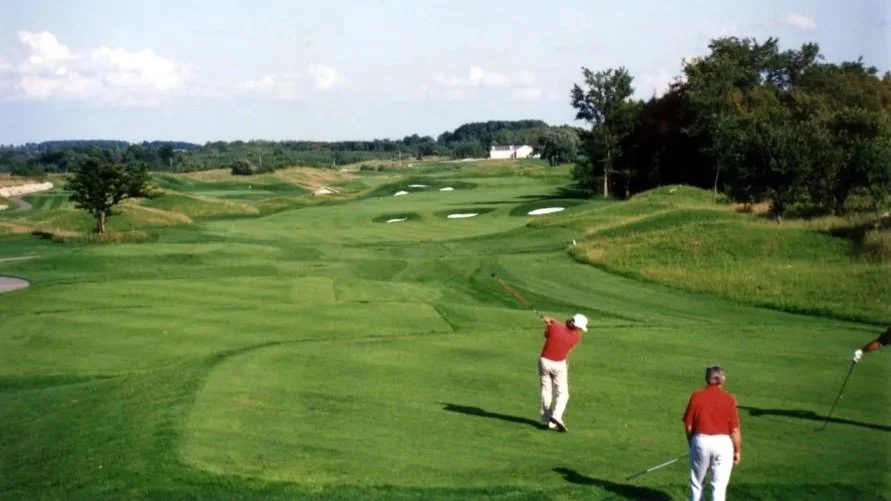
The 14th hole on the Heathlands course (formerly 18th) in 1992
“Ten years later they contacted me for building two more golf courses,” Carrick says with a laugh. “It was a great surprise.”
You can’t quite understand why and how the Hoot and the North came to be without knowing more about the Heathlands, first. That course project, Carrick says, was designed in March 1991, and by September of that same year the course was done and ready for a full opening the following spring. “That was a whirlwind schedule,” Carrick says.
With the Heathlands, it made a lot of sense to build something that was different from what’s usually seen in Ontario. Carrick, whose first true links experience was at Portmarnock in Ireland, says that kind of golf opened his eyes to a unique style of play.
He decided to do his very best links-inspired layout for Osprey Valley, and it’s been well received ever since.
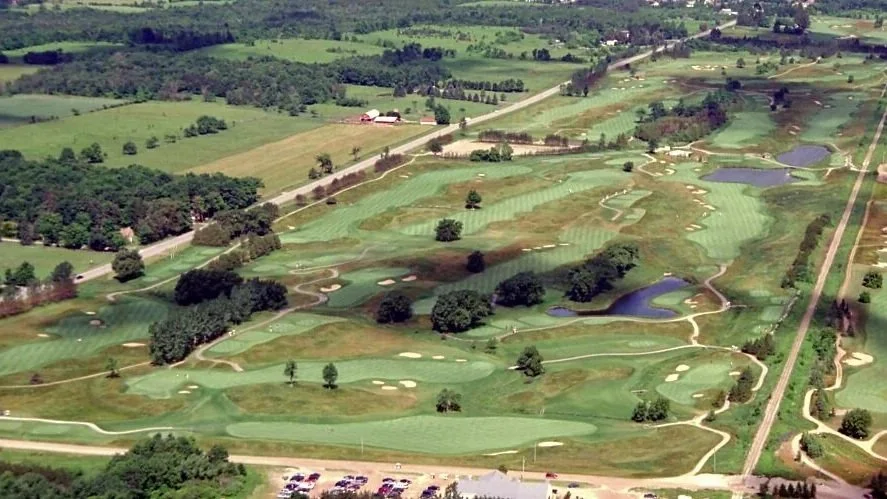
The Heathlands course from above in 2002
Fast forward a decade and the Humeniuk family returned to Carrick with its new vision – 54 holes over three distinctive courses, all in one location.
Carrick says he thought back to his initial vision of what two Osprey Valley courses could be, and a traditional parkland layout that would become the North (initially named Toot) was a natural. As far as the third course was concerned? Something with a different “character” was called for, and so the sandy waste areas and scrubby pine barrens on the property had him energized to design what would become the Hoot. Carrick had played the legendary Pine Valley by then, consistently either the top-ranked or near-the-top-ranked golf course on the planet, and could think of no better inspiration for the course.
Some of the undulations at the North course were actually created through the gravel extraction – the valleys and ridges that were left behind became golf holes, such as the steep left-to-right camber of the 13th hole. The Hoot site, meanwhile, had less gravel but was sandier and boasted plantation pines, providing the perfect backdrop for the wasteland course’s style.
“The intention at the time was to have each golf course have its own style and identity and each one would be a different experience than the next,” says Chris Humeniuk, TPC Toronto at Osprey Valley President. “You could spend three days with us and have three different golf experiences. It sounds simple but that was the crux of it.
“Other places you could play three or four golf courses but they’re not that different. But that is not what you get when you come and visit us.”
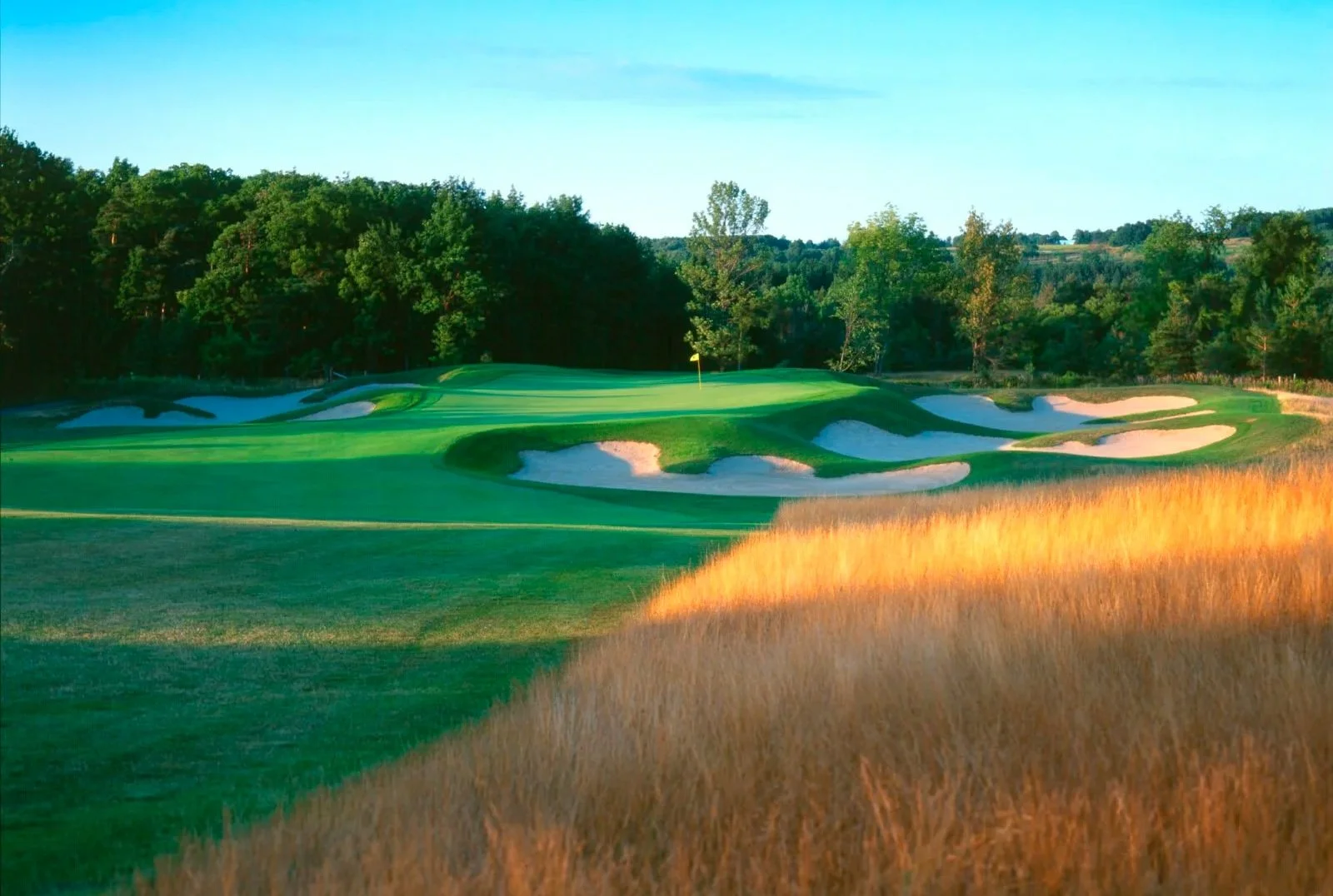
The 14th hole (RBC Canadian Open Rink Hole) on the North course before the 2023 renovation
For the North, Carrick says the design started simply – it needed to be something on a different scale than the Heathlands. Carrick and his team had more area to work with and were quick to expand the footprint to give golfers more width off the tee. Ironically enough, the Hoot was intended to be more challenging than its more approachable counterpart in the North - which now hosts the RBC Canadian Open after a 2023 renovation.
“But that’s the secret to building a good golf course,” Carrick explains. “You have the flexibility to set up championship events without having to redesign it. You just have it set up and you can move the pin positions and set the tee markers.”
Carrick, who worked through a “busy time” on five courses in the Greater Toronto Area in the early 1990s including the Heathlands, says while both the Heathlands and the Hoot have some fairly direct inspirational links, there wasn’t one specific club the North is modelled after. Instead, he points to some great North American parkland layouts – like Capilano Golf Club in Vancouver, St. George’s Golf and Country Club in Toronto, or event San Francisco Golf Club – for where he pulled some artistry. Ian Andrew, who worked as a Carrick associate on the construction of all three Osprey Valley courses and led the 2023 renovation of the North, says Royal Melbourne and Winged Foot inspired how many of the green sites were framed.
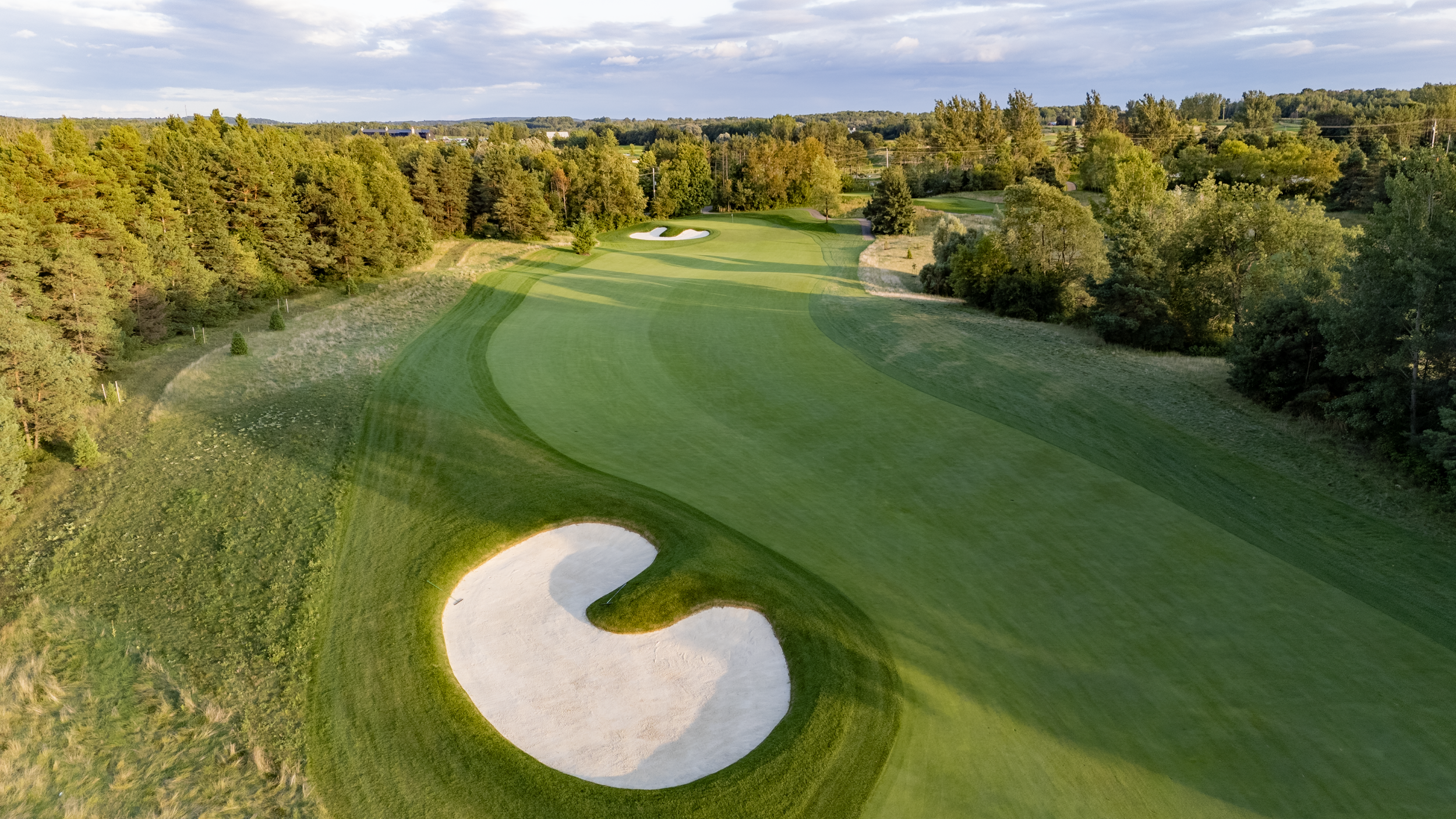
16th hole on the North course

Hole 5 and 6 on the North course
The Hoot is a perfect combination of having rugged intensity while also being serene (you don’t come back to the clubhouse after you head out on the front nine, for example) while the North has evolved into a championship layout that proved its championship credentials during its 2025 RBC Canadian Open debut. Carrick was of course thrilled that a public course was able to play host to Canada’s national open.
“You want your golf courses to be played by as many people as possible and as a designer, it’s nice to have your courses appeal to as wide an audience as possible,” says Carrick.
Of the two layouts, Carrick says the par-3 15th on Hoot was his favourite hole to build out. The site now occupied by nos. 11-15 on the Hoot was open, flat, and featureless when Carrick started.
“It didn’t really have anything that really stood out like the other parts of the property that was created via shaping or tree planting,” says Carrick. “(Fifteen) was a dramatic transformation from what it was previously.”
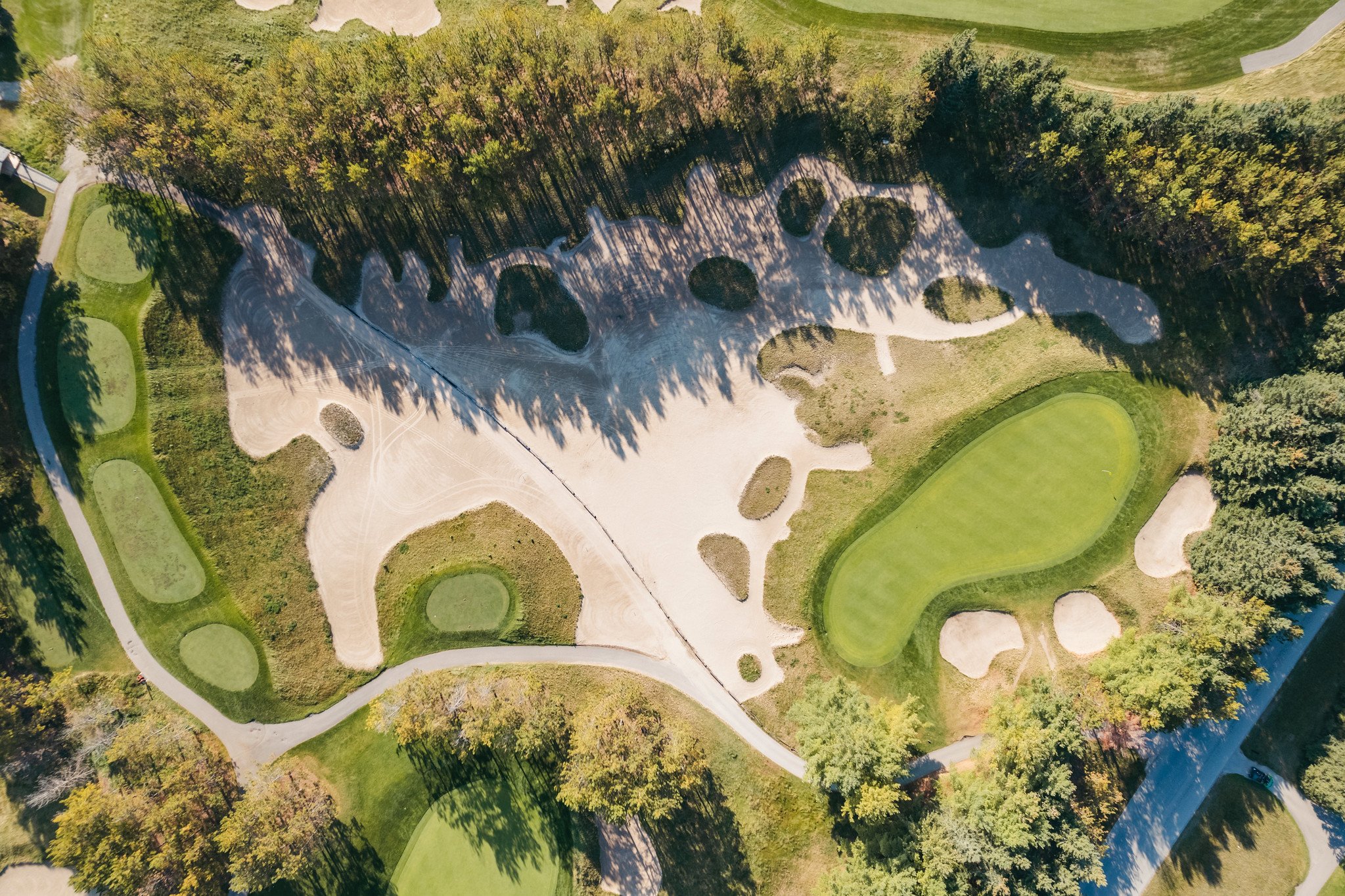
Overhead view of the 15th on the Hoot course
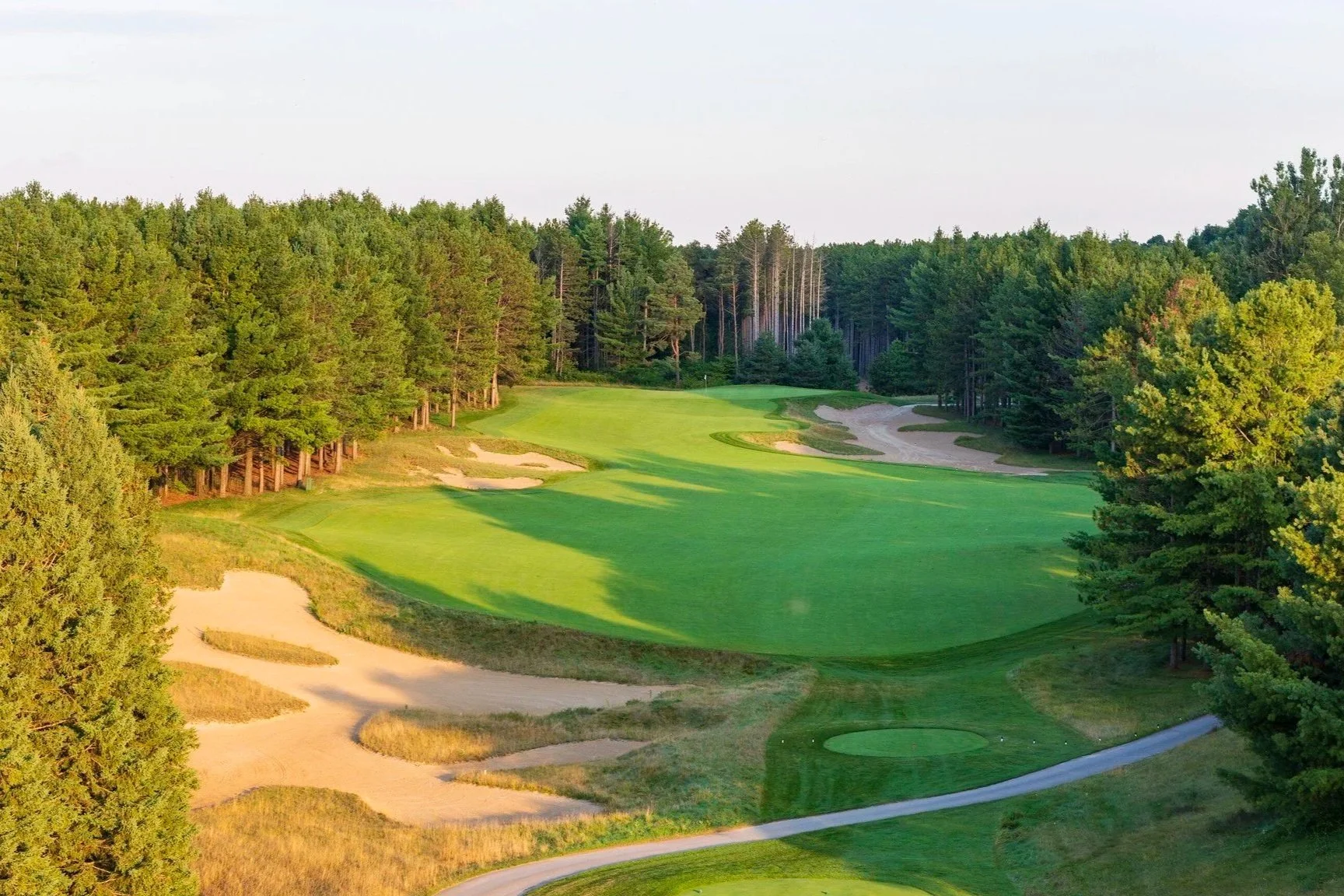
The 2nd hole on the Hoot course
The work that Carrick did has been long heralded, even by some of the best in the world. Cougar Collins, who grew up playing all three courses and is now a touring pro (and qualified for the RBC Canadian Open in 2025), says the Hoot is, in his opinion, “one of the most fun golf courses” he has ever played. And the North did an exemplary job with its hosting duties for the Canadian Open last year.
“The finishing stretches of both the North and the Hoot are incredible and what makes them top-tier courses,” Collins says. “I have some of my favourite memories playing the Hoot and North courses as a kid.
“And I think it’s unreal for Canadian golf to have the Canadian Open at TPC Toronto. Anyone can come out and play a golf course that’s easily accessible.”
Now with three exciting – and very different – 18-hole layouts to choose from, TPC Toronto is a true golfing destination that’s closer than you think. With the quarter-century celebrations on for both the Hoot and the North, it’s never been a better time to come experience those courses – and everything else TPC Toronto has to offer these days.
“We have a Common Purpose embedded into our onboarding for new employees, and it’s to make sure each of our guests have a memorable experience every time they visit us,” Humeniuk says.
No matter which golf course you play.
To receive more news, stories and information about TPC Toronto at Osprey Valley, sign up for our bi-weekly newsletter Osprey Insiders at this link.